What is Metal Dye and How is it Used in Various Industries?
Metal dye is a vital component in various industries, impacting aesthetics and functionality. The market for metal dye was valued at approximately $1.2 billion in 2023, with a projected growth rate of 6.5% annually. Such data emphasizes the increasing demand for metal dye in sectors like automotive, aerospace, and manufacturing.
In the automotive industry, metal dye enhances the appearance of vehicles while protecting against corrosion. For instance, anodizing with metal dye can significantly increase a part's lifespan. Interestingly, some companies struggle with consistency in color application. This inconsistency can affect brand reputation and consumer trust.
The aerospace sector also utilizes metal dye for both visual appeal and safety. Aircraft components undergo stringent testing, yet failures still occur due to improper dye application. As industries continue to evolve, challenges remain in balancing cost with quality. Understanding metal dye’s role is essential for future innovations and sustainability efforts.

What is Metal Dye? An Overview of Its Definition and Composition
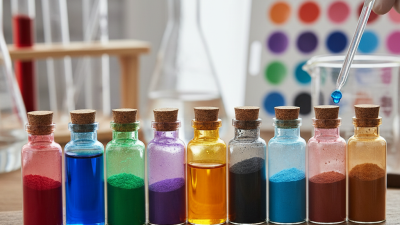
Metal dye is a specialized type of pigment used in a variety of industries. It is designed to color metal surfaces effectively. The composition usually includes metal salts, organic compounds, and sometimes, additives to enhance stability and adhesion. The choice of materials impacts the final color and durability of the dye.
In practice, metal dye is often utilized in automotive and aerospace sectors. Here, it provides not just aesthetic appeal but also protection against corrosion. The application process varies. It may involve spraying, dipping, or brushing the dye onto the metal surface. Each method has its pros and cons. For instance, spraying might offer even coverage, but it can also waste materials.
Artisans and manufacturers must consider environmental factors. Some dyes may not adhere well in extreme conditions. Testing is essential before mass production. There is no one-size-fits-all solution in using metal dyes. Each project may require adjustments and reflections on earlier techniques. Balancing color vibrancy and longevity poses a challenge that needs attention.
Metal Dye Usage in Various Industries
The Chemical Process of Metal Dyeing: Techniques and Reagents Used
Metal dyeing involves intricate techniques to alter the color of metals. This process uses various reagents to achieve striking hues. Common techniques include anodizing and electroplating. Anodizing uses an electrochemical process that thickens the metal's oxide layer. This layer can absorb dyes, creating vibrant colors. Conversely, electroplating involves applying a thin layer of another metal, often with inherent color properties.
Chemical reagents play a pivotal role in metal dyeing. Acids, salts, and organic dyes are frequently utilized. For instance, sulfuric acid is often used in anodizing aluminum. The reaction can lead to beautiful colors, but precision is crucial. A slight miscalculation can result in uneven coloration. Additionally, when working with electroplating, it's essential to keep the solution consistent. Variations can cause texture changes or imperfections on the surface.
The choice of dye also impacts the final look. Organic dyes can provide rich colors, but they require careful application. Sometimes, the result may not meet expectations. Achieving the perfect shade can be challenging and may necessitate multiple attempts. Metal dyeing can be rewarding, yet it invites continuous improvement and experimentation. Each project teaches valuable lessons in chemistry and artistry.
What is Metal Dye and How is it Used in Various Industries?
| Industry |
Common Techniques |
Reagents Used |
Applications |
| Automotive |
Electrophoretic Deposition (EPD) |
Metal salts, acids |
Enhancing aesthetics and corrosion resistance of parts |
| Fashion |
Anodizing |
Sulfuric acid, dye solutions |
Creating colorful and unique jewelry pieces |
| Electronics |
Chemical Vapor Deposition (CVD) |
Organic solvents, metal compounds |
Coating semiconductors for improved conductivity |
| Construction |
Powder Coating |
Polyester, epoxy resins |
Durable finishes for structural metals |
| Aerospace |
Plating |
Nickel, chrome solutions |
Enhanced durability and protection of aircraft components |
Applications of Metal Dye in the Textile Industry: Statistics and Trends
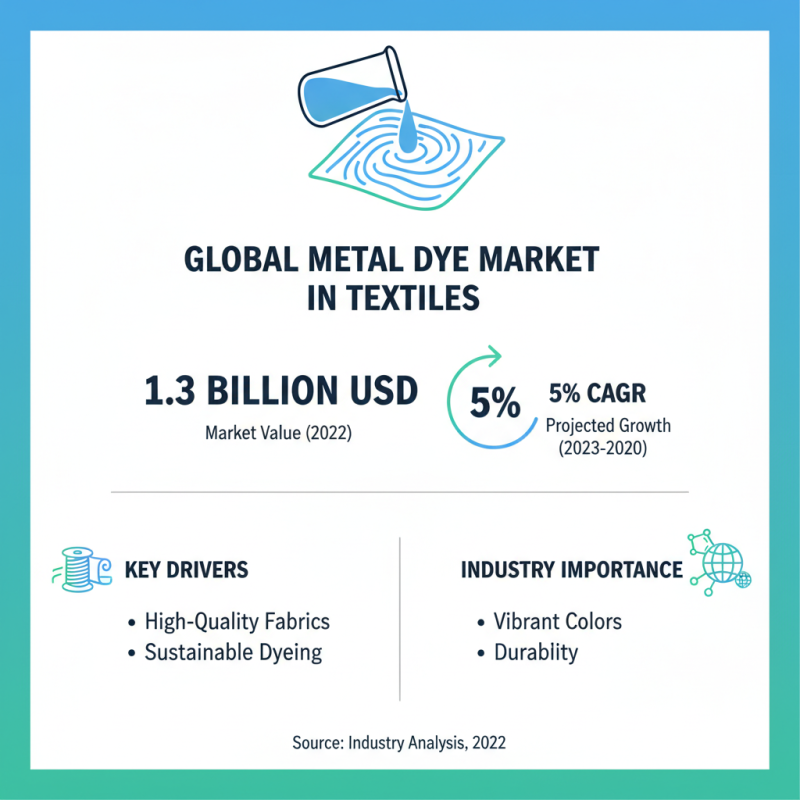
The textile industry heavily relies on metal dyes for vibrant colors and durability. In 2022, the global market for metal dyes in textiles was valued at approximately $1.3 billion. Analysts forecast a compound annual growth rate (CAGR) of 5% through 2030. This growth reflects increasing demand for high-quality fabrics and sustainable dyeing processes.
One noteworthy trend is the rising preference for eco-friendly metal dyes. Consumers are more aware of environmental impacts. Research shows that 45% of textile companies aim to reduce their carbon footprint by using sustainable dyes. However, challenges remain. Many metal dyes contain elements that may harm the environment. Striking a balance is essential for manufacturers to satisfy both quality and sustainability.
Moreover, the popularity of metallic finishes is on the rise. According to a recent survey, 30% of designers incorporate metallic tones in their collections. This trend necessitates a careful selection of metal dyes. Mistakes in formulation can lead to inconsistent colors. Thus, ongoing research and development are crucial for improving dyeing techniques and ensuring better results.
Impact of Metal Dye on the Automotive Sector: Efficiency and Sustainability
Metal dye plays a critical role in the automotive sector. It enhances the appearance and durability of vehicles. Cars today are not just machines; they are works of art. The right metal dye can make a significant difference in visual appeal.
Efficiency is a top priority for manufacturers. Metal dyes improve processes by reducing the need for multiple coatings. This saves time and resources. The automotive industry faces sustainability challenges. Many dyes are now made from eco-friendly components. This shift creates an opportunity for environmentally conscious practices.
Tips: When choosing a metal dye, consider its impact on both aesthetics and longevity. Look for products that are less harmful to the environment. Regular evaluation of dye performance can lead to better outcomes in production. Experimenting with different formulations may also yield unique and appealing results. Reflections on dye processes can uncover areas for improvement in efficiency.
Regulatory Standards for Metal Dye Usage in Manufacturing Processes
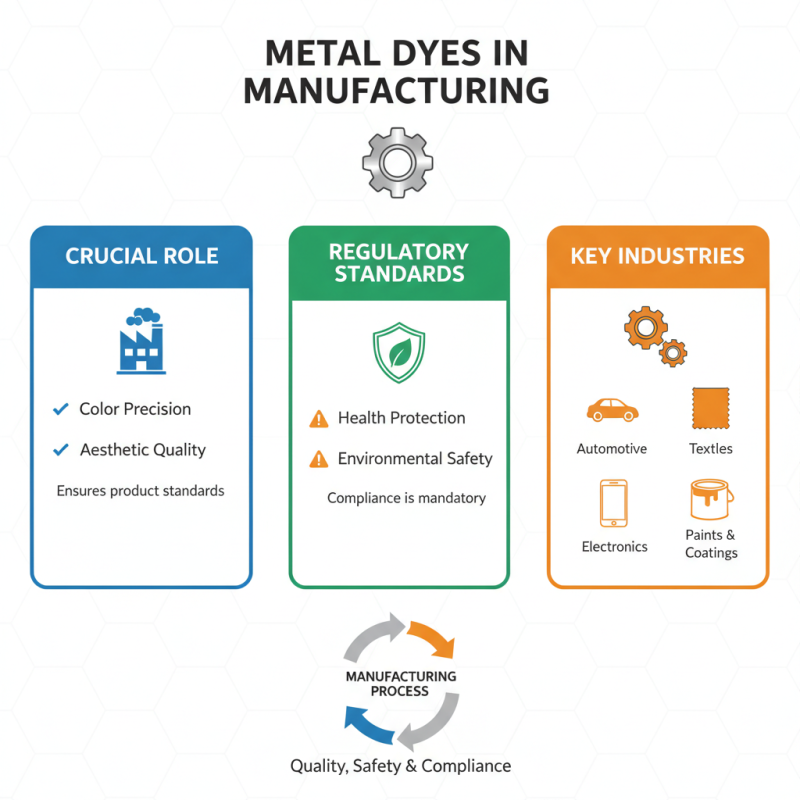
Metal dyes play a crucial role in various manufacturing industries. They ensure that products meet color specifications and aesthetic standards. However, the usage of metal dyes is governed by strict regulatory standards to protect health and the environment.
Regulatory bodies establish guidelines for the safe use of metal dyes. The Environmental Protection Agency (EPA) in the U.S. outlines acceptable limits for heavy metals in dyes. According to a 2022 report by the International Journal of Environmental Science, nearly 30% of metal dyes exceed these limits, raising concerns. Industries must be diligent about sourcing dyes that comply with these regulations.
Tips: Always check for certifications. Ensure your metal dyes adhere to industry standards. This can minimize liability and enhance product safety.
Manufacturers often face the challenge of balancing cost and compliance. Some may be tempted to use cheaper dyes that violate regulations. This decision can lead to significant fines and damage to reputation. Investing in compliant products is not just about cost; it reflects the company's commitment to quality.
Ultimately, adherence to regulatory standards in metal dye usage is non-negotiable. It benefits manufacturers and the broader ecosystem. However, constant vigilance and ethical choices are needed.